Jerusalem’s Passover night was dark and heavy. In that hour, as the crimson blood of countless sacrificial lambs poured endlessly from the temple altar and seeped into the Kidron Valley—staining its rough streambed red—the true Lamb, who would bear the crushing weight of humanity’s sin upon His whole body, quietly turned His steps toward the Mount of Olives.
In Gethsemane—whose name means “the place of pressing oil,” that barren and lonely ground—Jesus fell facedown to the earth, utterly alone. Only days earlier, He had entered the city as the King of glory amid crowds waving palm branches and shouting praise. Now He stood before absolute solitude in pitch-black darkness. This was not merely the opening scene of a tragedy, but the vivid battlefield where the story of salvation for humankind was being written with its fiercest, most heartbreaking intensity.
From the Blood-Stained Kidron Valley to Silent Gethsemane
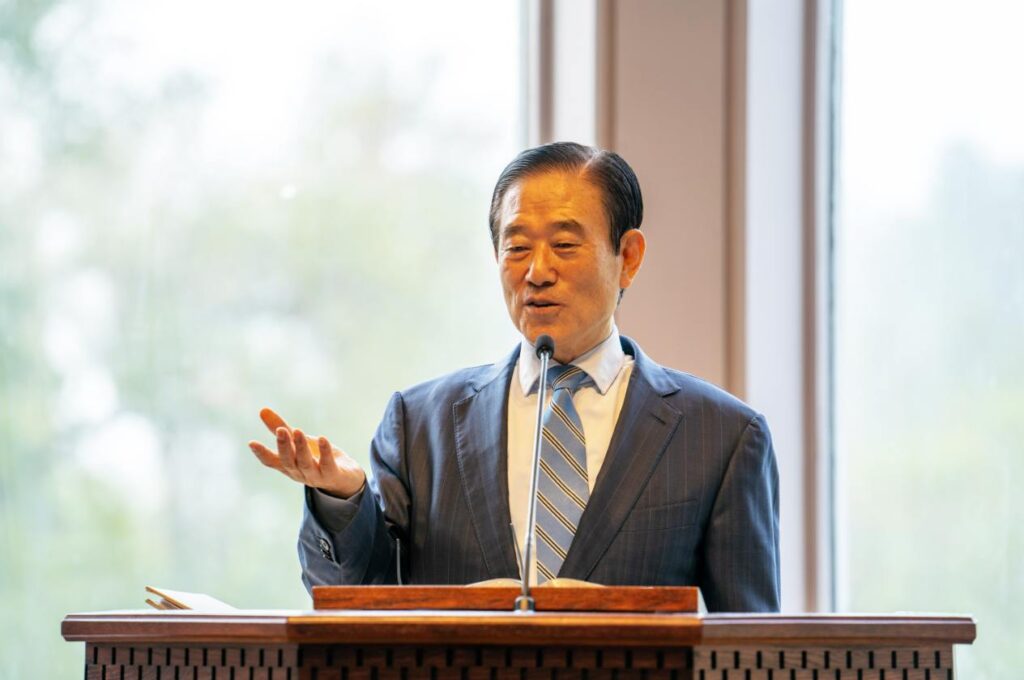
Before the overwhelming destiny of the cross, the extreme fear and trembling any human can feel are fully present in the cold night air of Gethsemane. Pastor David Jang does not attempt to cover this place of anguish and sorrow with theological embarrassment, nor does he romanticize it. Instead, he carefully guides us into the deepest and truest heart of the gospel.
If the Gospel of John breathlessly emphasizes Jesus’ glorious resolve toward the cross, the Gospel of Mark exposes, without restraint, the human abyss and trembling through which that straight path had to pass. Here, through honest Scripture meditation, we learn that true faith is not an inhuman, steel-like condition devoid of fear. Rather, it is the courage to move toward God even in the very center of fear—carrying our frailty honestly before Him.
C.S. Lewis, the British philosopher and Christian apologist, penetrated the problem of human suffering and obedience and observed that “pain is God’s megaphone to rouse a deaf world.” The crushing weight Jesus endured in Gethsemane was not mere punishment or a meaningless calamity. It was a holy and necessary press upon the soul—an unavoidable spiritual “oil press”—meant to draw forth that great confession of obedience: “Not as I will, but as You will.”
The Cup of Suffering and “Abba, Father”: The Mystery of Desperate Obedience
As Jesus lay prostrate and prayed until His sweat became like drops of blood, His blood-tinged prayer was not a weak attempt to escape reality. Here Pastor David Jang’s sharp theological insight shines with particular brilliance.
The cross was not a path of defeat forced upon Him because He lacked power. It was a holy choice—made though He could have avoided it by His own authority—yet He decided, in the end, not to avoid it. Jesus calling the Almighty by the most intimate name, “Abba, Father,” reveals that the essence of faith is not resignation to fate, but a steadfast relationship that trusts the Father’s goodness to the very end.
We often pray with an intense desire for our will and wishes to be fulfilled. But true prayer is the process of self-emptying in which our will is thoroughly broken and the Father’s good will is allowed to permeate our lives completely. In this agonizing and solitary obedience, we finally begin to discover the true depth of grace held within the cross.
The Disciples Sinking into Spiritual Drowsiness—and the Loneliness of the One Who Stays Awake
Yet while this fierce, cosmic spiritual battle unfolded, the disciples—who should have stood closest and watched with the Lord—could not overcome physical exhaustion and fell into deep sleep. “Simon, are you asleep? Could you not keep watch for one hour?” This lament is not merely a rebuke aimed at disciples who once slept long ago on the Mount of Olives. It is also Pastor David Jang’s solemn spiritual warning, powerfully shaking awake the souls of all of us today who drift into spiritual numbness and complacency amid a glittering world.
Peter boasted loudly that even if he had to die with Jesus, he would never deny Him. Yet in the face of approaching temptation and fear for survival, he tragically proved how quickly shallow human resolve can collapse. The Lord’s compassionate words—“The spirit indeed is willing, but the flesh is weak”—are not condemnation of the disciples, but a painful diagnosis that pierces the fundamental fracture within human existence.
The Gospels even record, without omission, the shame of a young man who, seized by fear, fled naked after leaving his linen cloth behind. By doing so, they paradoxically reveal that faith is not a heroic tale of human triumph, but the greatness of the cross’s love—a love that ultimately embraces even those who fail and fall.
The Paradox of the Cross: A Resurrection Morning Re-Formed by Grace
In the deep night of Gethsemane, after three rounds of prayer soaked with sweat and tears, Jesus finally said, “Rise, let us go,” and stepped forward—quietly, yet boldly—toward the coming darkness and the forces of betrayal. Pastor David Jang’s profound preaching makes clear that this final declaration is not resignation to unavoidable despair, but a renewed resolve flowing from complete trust in the Father.
Prayer did not remove the bitter cup of suffering that was about to come. But it utterly transformed Christ’s inner order, enabling Him to face suffering head-on. The sublime peace that does not waver even before violence wielding torches and clubs, the astonishing paradox in which the apparent weakness of the cross shatters the power of death and accomplishes the mightiest salvation—this can be fully explained only within the true gospel.
Lenten meditation earnestly calls our scattered and restless hearts back into the silence of the Garden of Gethsemane. In every dark valley of life where our empty will collides fiercely with God’s good will, we must not run away or fall asleep behind the excuse of weariness. Instead, we must stay fully awake and fall down before Him.
As we follow the blood-marked footsteps of Jesus—who did not evade suffering, but walked steadily and with conviction toward the cross—we will be able to greet, at the end of the darkest solitude, the radiant morning of resurrection breaking forth at last. The narrow and rugged path of suffering and obedience that Pastor David Jang sets before us today is, in the end, the most beautiful journey of life—one that raises us up again from spiritual sleep and collapse and leads us into true fellowship with the glorious Christ.